Buntings · Perching birds
Corn Bunting
Link copied.
Emberiza calandra
Link copied.
Voice
Song
Song
Song
How to recognize it
-
Smaller than a pigeon
-
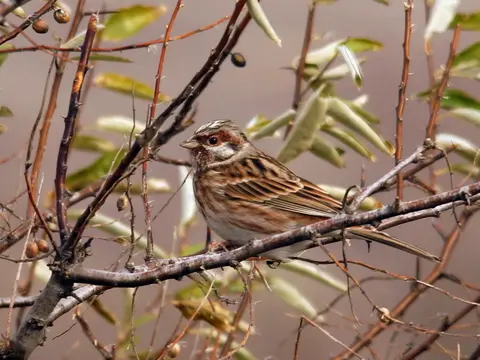
Stocky silhouette, grey-brown back and whitish underside
-
Dark streaks running lengthwise across the body
-
Male song — a repeated metallic jangle, like a bunch of keys
About the species
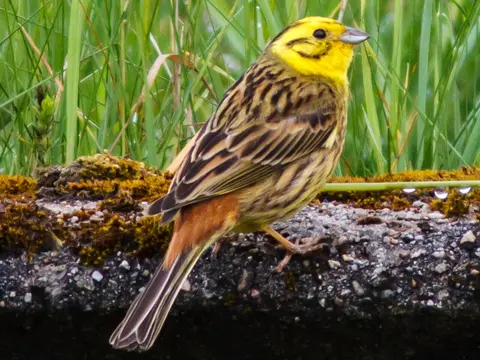
Buff and grey-brown plumage is crossed by dark streaks that run down the pale breast and along the flanks. A dark eye and yellowish bill add contrast to the face, while the brown tail is plain. Males and females look much alike, with no bold color difference between them.
During the breeding season, males defend territories and sing from low shrubs, fence posts, or telephone wires. The song repeats in a metallic rattle, like keys jingling, and can carry across open ground.
It lives in open country with scattered trees, including farmland and weedy ground. Seeds make up most of its food, while insects become especially important when it feeds juveniles. Most stay in the same region year-round, though some from colder parts of central Europe and Asia move south for winter.
Where to find
-
During the breeding season in open farmland and weedy wasteland, listen for the Corn Bunting's repetitive metallic song from a low bush, fence post, or telephone wire.
-
In meadows and steppes near water, watch for feeding among the grasses on seeds of herbaceous plants.
-
From August to September, watch for flocks during local movements in meadows and steppes near water.