Buntings · Perching birds
Pine Bunting
Link copied.
Emberiza leucocephalos
Link copied.
Voice
Song
How to recognize it
-
Length 16–17.5 cm
-
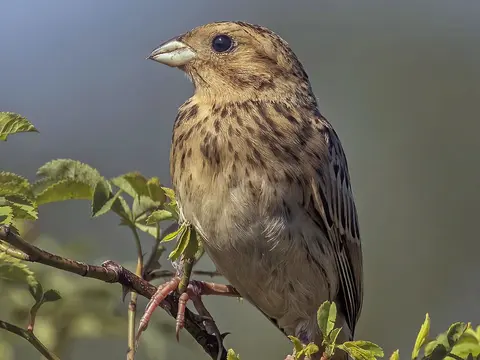
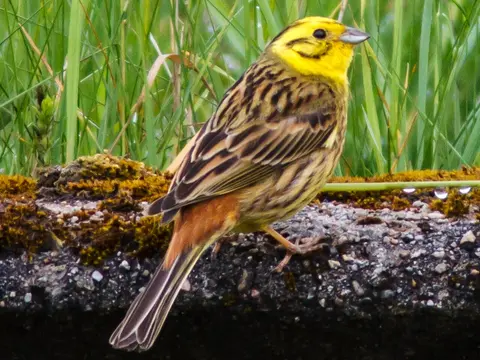
Male: white crown and cheeks, chestnut forehead and throat
-
Brown back with heavy streaking; female duller, more streaked below
-
Song and calls like those of the yellowhammer
About the species
In the male, a white crown, cheeks and underside contrast with a chestnut forehead and throat. Fine streaks cross the brown back and rump, breaking up the warm coloring. The female is duller overall, with a white throat marked by dark lines and heavier streaking below; young plumage is reddish brown.
Its song and calls resemble those of a Yellowhammer. It nests on the ground, laying four to six eggs, and adults bring insects to feed the young.
It uses open land with patches of scrub or trees, especially open pine woodland; it also occurs in steppe groves and cultivated areas. Seeds are its natural food, and adults feed insects to chicks. Across temperate Asia, it breeds from Russia through northern Kazakhstan and Mongolia to northeast China, then moves south for winter into Central Asia, northern India and southern China.
Where to find
-
Outside town, listen in open conifer woods, usually pine, for a song like a Yellowhammer's; sightings are rare in western Europe.
-
On open cultivated land with scrub or scattered trees, watch for seed feeding on the ground.
-
In steppe groves during the breeding season, look near the ground: nests are there, and young are fed insects.