Buntings · Perching birds
Rock Bunting
Link copied.
Emberiza cia
Link copied.
Voice
Song
How to recognize it
-
Body length 16 cm
-
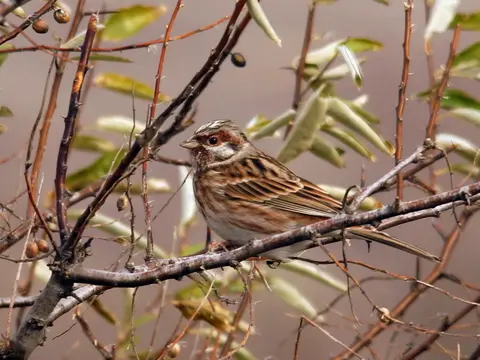
Breeding male with a chestnut back and plain deep-buff underside
-
Breeding male with a pale grey head and black stripes; female's pattern less contrasting
-
Sharp call, "tsee"
About the species
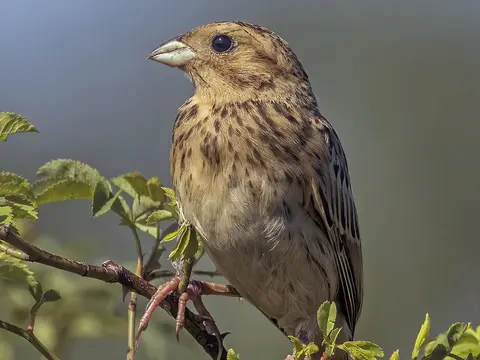
In breeding plumage, the male’s pale grey head is crossed by black stripes, above chestnut-brown upperparts and plain, deep buff underparts. Females are paler overall, with a greyer-brown back and less sharply marked head. Young resemble females but have streaking across the head, giving their face a more mottled look.
Its call is a sharp "tseee"; its song is a quick twitter ending in "churrrr-chirrriiii-itt." During breeding, pairs defend territories and nest on the ground or, less often, in a low bush. Both parents feed the chicks.
It breeds on dry, sunny rocky hillsides, among shrubs and scattered trees, and sometimes in vineyards. Seeds are its usual food, with insects important when it is feeding young. Northern populations move south for winter, often into areas where southern populations stay year-round.
Where to find
-
On open, dry rocky mountain slopes, listen for the Rock Bunting's sharp "tseee" call and twittering song.
-
Outside the breeding season, on sunny rocky hills among shrubs and trees, watch for seed searching — seeds are the usual food.
-
In Central Europe, while young are being fed, look on dry rocky slopes for adults searching for insects, which are important in the chicks' diet.