Reed warblers · Perching birds
Eastern Olivaceous Warbler
Link copied.
Iduna pallida
Link copied.
How to recognize it
-
12–14 cm long
-
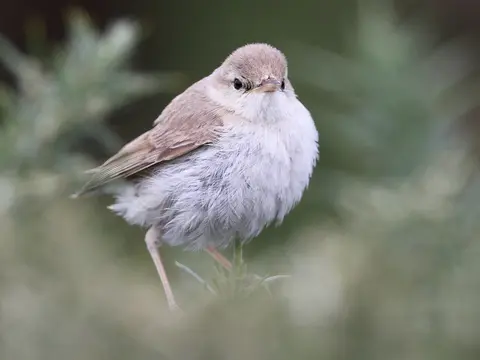
Plain pale-brown upperparts, whitish underparts with a pale yellow tint
-
Long, strong, pointed bill
-
Characteristic downward tail flick
About the species
Across the back, its plumage is pale brown, while the underparts are whitish, sometimes with a faint yellow cast. A strong, pointed bill and pale eyebrow give the face sharper detail, while grey legs show as it moves through a bush. The upperparts may carry a greenish tinge.
Its song is a quick, nasal babble. Near the nest, a singing male may rise diagonally and then descend; the tail often flicks sharply downward between movements.
It uses dry, open ground with bushes or scattered trees, including cultivated land, and also occurs in scrub, orchards and palms. It picks insects and spiders from leaves and branches. Northern populations migrate south for winter, to tropical Africa or Arabia, while some southern populations stay year-round.
Where to find
-
In dry open country with cultivated land, bushes, or scattered trees, look for the Eastern Olivaceous Warbler picking insects and spiders from leaves and branches.
-
Among tamarisk thickets beside water or on the coast, watch for the characteristic downward tail-flick.
-
In the northern part of the range during the breeding season, listen near low bushes for a male singing as he rises diagonally and descends on a slant.