Buntings · Perching birds
Ortolan Bunting
Link copied.
Emberiza hortulana
Link copied.
Voice
Song
Call
Call
How to recognize it
-
About 16 cm long
-
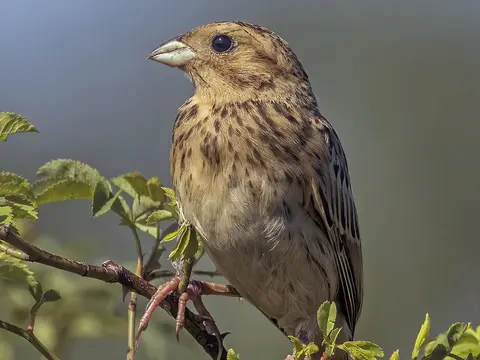
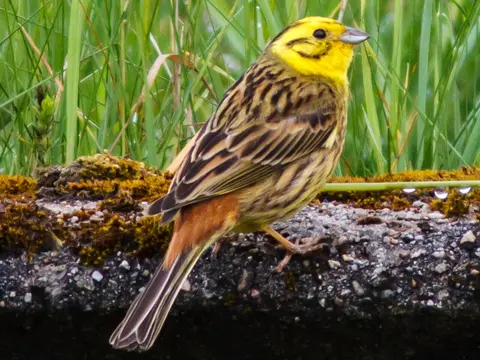
Greenish-grey head, duller plumage than the Yellowhammer
-
Adults: yellow ring around the eye
-
Monotonous song of several whistles, simpler than the Yellowhammer’s
About the species
Muted in color overall, the Ortolan Bunting has a greenish-grey head and subdued plumage. Adults show a clear yellow ring around the eye, set against a face that otherwise stays soft in color. That small ring is the brightest mark in its plumage.
Its song is a few plain, fairly even whistles. It places its nest on or close to the ground, and feeds its young with beetles and other insects.
It uses grain fields and nearby areas across much of Europe and western Asia, though its preferred habitat varies by region. Seeds make up most of its food. In autumn it migrates to tropical Africa, returning in late April or early May; it breeds as far north as Scandinavia and beyond the Arctic Circle.
Where to find
-
In cereal fields and nearby, look for an Ortolan Bunting feeding on seeds close to the ground.
-
During chick-rearing near cereal fields, watch for beetle and insect hunting as the young are fed.
-
In French vineyard districts, listen for the male's simple song of several whistles — vineyards are a documented local habitat.