Wagtails and pipits · Perching birds
Eastern Yellow Wagtail
Link copied.
Motacilla tschutschensis
Link copied.
Voice
Call
Call
How to recognize it
-
15–16 cm long, slender silhouette
-
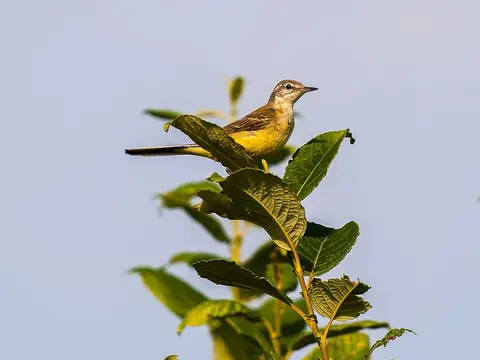
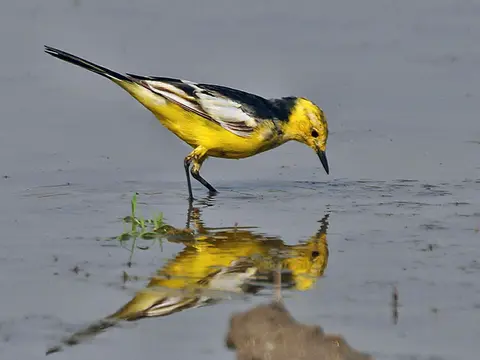
Breeding adult male: olive-green above, yellow below
-
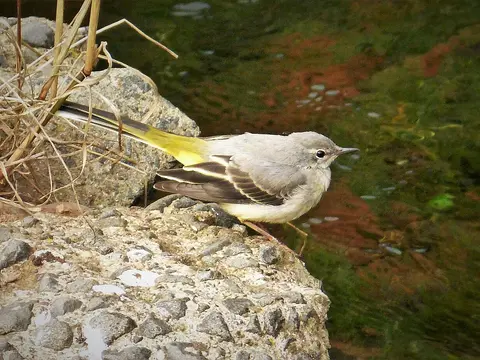
In first-winter plumage and many females, yellow may be diluted with white
-
Long tail constantly wagging; high-pitched, rasping call, "zrri"
About the species
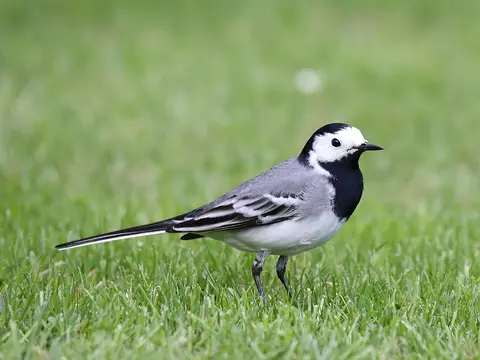
An olive-green back and yellow underside give the Eastern Yellow Wagtail its overall coloring, though the yellow can be softened with white in first-winter plumage and in many females. Its wings are dark brown, and the long tail is nearly always bobbing. Breeding males vary in head color and pattern, so the face can look quite different across its range.
In open country near water, it catches insects and gives a high, rasping "zrri" or "jeet" call. It nests in grass tussocks, laying four to eight speckled eggs.
Wet meadows and grassy marshes are among its breeding places. It breeds across the eastern Palearctic and Alaska, then most head to Southeast Asia and Australia for winter, with some reaching as far west as eastern India and Sri Lanka. Stray individuals also turn up away from their wintering grounds during migration.
Where to find
-
During the breeding season, scan wet meadows by water in the eastern Palearctic and Alaska for the Eastern Yellow Wagtail's constantly wagging tail.
-
In those breeding regions, nests are hidden in grass tussocks — look from a distance during the nesting season.
-
In western and northwestern Europe, encounters are rare in late autumn and winter; by open water, listen for a high, rasping "zrri".