Wagtails and pipits · Perching birds
Gray Wagtail
Link copied.
Motacilla cinerea
Link copied.
Voice
Call
Alarm
Song
How to recognize it
-
18–19 cm long
-
Grey back, white sides, yellow breast and undertail; breeding male with a black throat
-
Long tail wagging while walking
-
Near fast streams and rivers in the breeding season; low, undulating flight
About the species
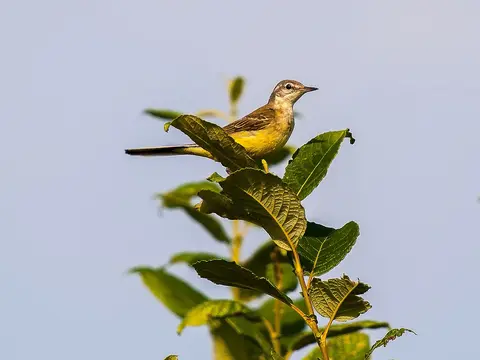
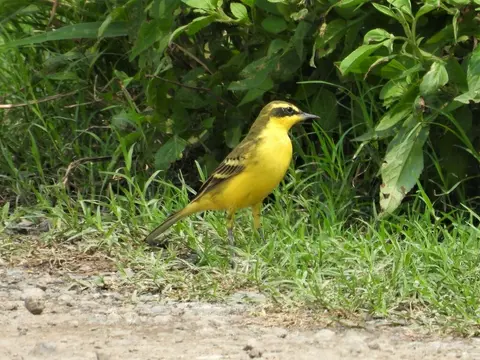
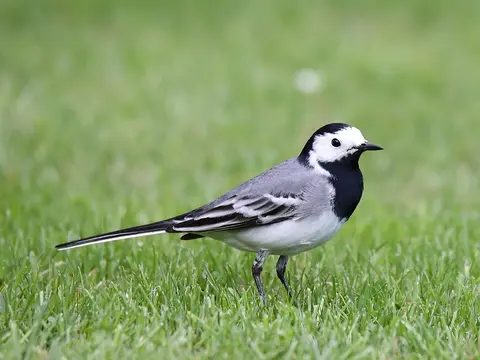
Slate-gray above, the Gray Wagtail has a pale stripe over each eye and a broken white ring around it. Its underside is mostly whitish, with bright yellow concentrated at the throat and beneath the tail. In breeding plumage, the male’s throat turns black, set off by pale stripes.
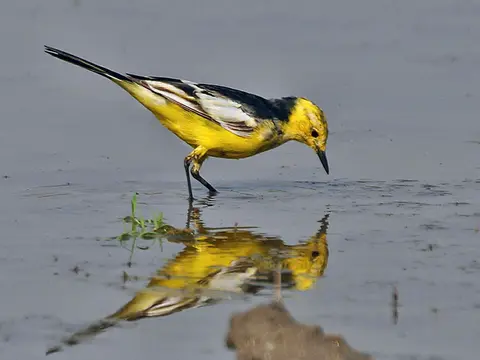
It walks with a steady tail wag, then flies low in an undulating path, giving a sharp "chi-cheep" call. It hunts insects along shallow water, alone or in pairs; in winter, it also searches roadsides, flying ahead before turning back to the same stretch.
It breeds beside fast-running streams and rivers, often nesting among stones and roots or in gaps in nearby structures. It feeds on aquatic insects and other small invertebrates, and many northern and eastern populations leave for warmer parts of Asia or Africa in winter; populations in warmer regions may stay year-round.
Where to find
-
In the breeding season beside fast-running streams and rivers, watch for a male's brief display flights — he rises and descends slowly with a rapid trill of high calls.
-
At wet meadows and shallow marshes, look for a Gray Wagtail feeding alone or in pairs, picking insects while wagging its tail as it walks.
-
In winter along roadsides, listen for a sharp "chi-cheep," then watch a short flight farther along the road and back toward its starting point.