Plovers · Shorebirds
Eurasian dotterel
Link copied.
Charadrius morinellus
Link copied.
How to recognize it
-
Body length 20–22 cm; compact build, short neck and bill
-
Broad white stripes above the eyes meet in a V behind the head
-
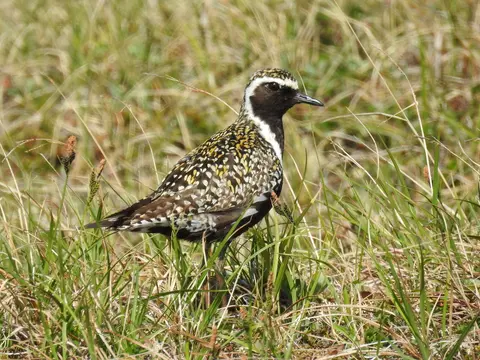
In spring and summer, adults have a chestnut breast edged in white and a black belly patch; females are brighter than males
-
Plain brown wings in flight, with no pale patches
About the species
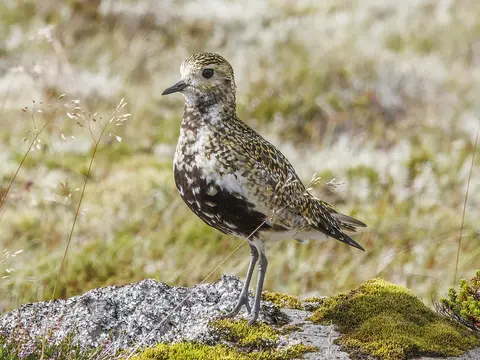
In breeding plumage, its warm brown back contrasts with a chestnut breast band edged in white and a black belly. Broad white stripes above the eyes meet behind the head, while a short black bill adds a dark mark. Females are brighter than males; outside the breeding season, the chestnut and black fade to greyer brown, with a pale breast line remaining.
Usually quiet, it gives a soft "pyurr" in flight, while the female's song is a repeated short whistle. On the ground, it runs a few steps, pauses to spot small prey, then darts after it. The male usually incubates the eggs and cares for the chicks.
It breeds on dry, stony tundra and open mountain plateaus, where mosses, lichens and low grasses leave patches of bare ground. Insects and other small invertebrates, including worms and snails, make up its food. During migration, small groups stop at inland fields or grassy sites before continuing to semi-desert wintering grounds in North Africa and the Middle East.
Where to find
-
During the breeding season on dry, stony rises in the northern tundra, watch the Eurasian dotterel make short runs and pauses as it catches insects from the ground.
-
On level, rocky mountain plateaus above the treeline during breeding, listen for the female's repeated short whistle during courtship flights.
-
At traditional inland migration stops — arable fields, fallow ground or grassy sites with bare patches and sparse, low growth — look for small groups feeding with quick runs and pauses.