Larks · Perching birds
Greater Short-toed Lark
Link copied.
Calandrella brachydactyla
Link copied.
Voice
Song
Song
Song
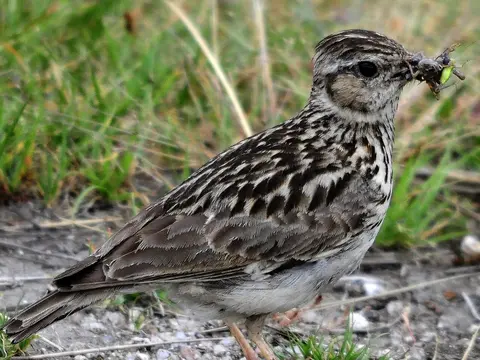
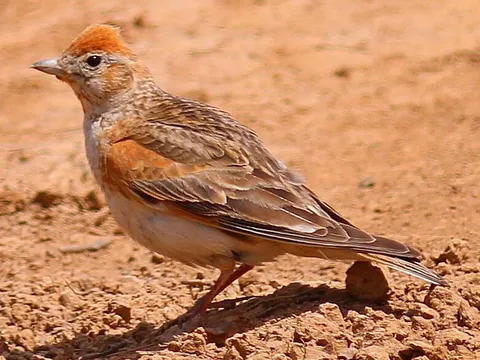
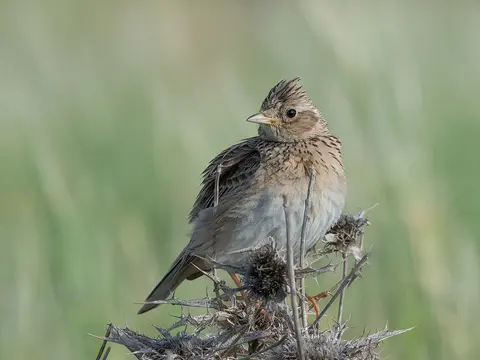
How to recognize it
-
14 cm, smaller than a skylark
-
Pale underparts, brownish crown
-
Strong pointed bill, dark tail
-
Open fields and wasteland; often flies low
About the species
The greater short-toed lark is a small, plain-looking lark that fits open country rather than dense green spaces. It gives an overall light, understated impression and is easy to overlook until it starts moving or singing.
It often sings from the ground or in a short, low flight. Outside the breeding season it may gather in flocks, and during migration those flocks can move very tightly and in sync.
It lives in dry open country, including fallow fields, pastures, semi-desert, and sandy areas. Its food is a mix of seeds and small insects, and many populations leave northern areas for warmer regions in winter.
Where to find
-
On dry wastelands, construction spoil, and sandy patches — Greater Short-toed Lark feeds on the ground there, running in short dashes between tufts of grass.
-
Along field edges and wide lawns with very short grass — especially in the morning, when it sits low and then pops up into a brief song flight.
-
Near airfields, big sports pitches, and other open rough ground — easiest to notice in flight, hovering low over bare earth.
-
Where sparse shrubs meet short grass — in dry weather, it often drops to puddles or sandy hollows to drink.