Grassbirds · Perching birds
Pallas's Grasshopper Warbler
Link copied.
Locustella certhiola
Link copied.
How to recognize it
-
Body length 12–16 cm
-
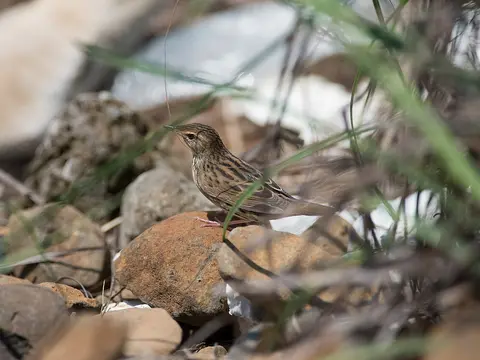
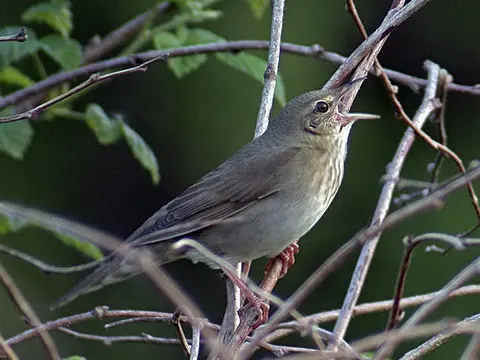
Adults with brown streaks on the back and whitish-grey underparts; juveniles yellower below
-
Creeps through tall grass and low growth, often in damp places
-
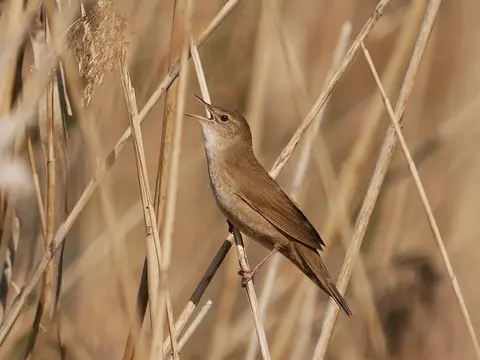
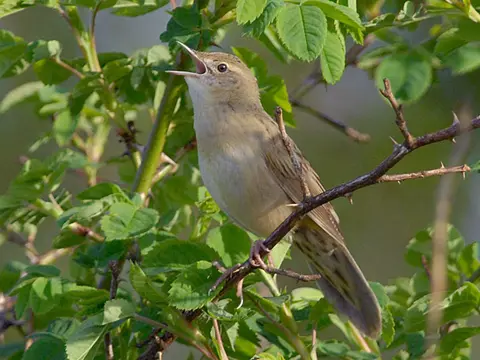
Varied song with changing trills
About the species
Brown dominates its upperparts, with fine streaks along the back and a warmer rusty-brown rump. The adult’s underside is whitish grey and mostly plain, except for streaks beneath the tail; white tips show at the ends of its tail and folded wing feathers. Younger ones are yellower underneath.
Most of the time it threads through grass and low foliage, staying difficult to spot unless it sings. Its song runs through varied trills in a flowing melody, rather than a steady mechanical reel.
It keeps to tall grass mixed with denser growth, especially in wet meadows and bogs near water, and also uses shrub cover at woodland edges. It feeds on insects and spiders, nesting on the ground among the vegetation. After breeding across northern and eastern Asia, it migrates south to winter from India to Indonesia.
Where to find
-
At breeding sites in North Asia, beside bogs and wet meadows near water, listen for a varied, melodic song from the tall grass.
-
At forest edges in North Asia, scan shrubs and tall grass in damp patches for movement as it creeps through low vegetation.
-
In western Europe, Pallas's Grasshopper Warbler is a rare vagrant; on Fair Isle, one of the best places to encounter it, it is usually hidden, but singing can sometimes give away its position.