Sandpipers · Shorebirds
Red Knot
Link copied.
Calidris canutus
Link copied.
Voice
Call
How to recognize it
-
23–26 cm long, compact shape, short neck and short straight bill
-
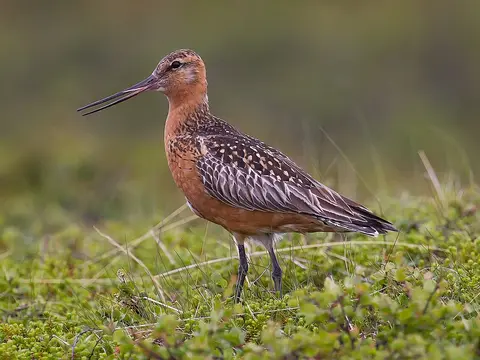
Cinnamon tones on face, throat and breast in breeding plumage; female slightly paler
-
In flight, white wing bar, grey tail and rump
About the species
In winter, the Red Knot has an ash-gray back with pale flecks and a whitish underside. In breeding plumage, its face, throat and breast turn cinnamon red beneath a mottled gray back. Its short, straight dark bill and dark legs are easy to pick out as it probes the shore, and a white bar crosses the wing in flight.
Along the shore, it walks and probes soft mud for buried prey, swallowing hard-shelled molluscs whole and crushing them in its muscular stomach. When alone it rarely calls; flocks give a low "knutt," or "knuup-knuup" on migration. Before a long journey, it feeds heavily and can nearly double its weight.
It nests on moist Arctic tundra and spends the rest of the year on coasts, often gathering on mudflats. Coastal meals include clams, snails and small crabs, while its Arctic diet includes spiders, larvae and other small invertebrates. Different populations travel to wintering coasts in western Europe, Africa, Australia, New Zealand and South America.
Where to find
-
On the Wadden Sea's muddy flats during spring and autumn migration, look for red knots walking along the shore and probing soft mud with their bills.
-
On muddy coasts of West Africa in winter, watch large flocks gathering to roost at the same site for months.
-
In the Arctic tundra during the brief breeding summer, watch for a male circling above its territory with quivering wingbeats before tumbling toward the ground.