Buntings · Perching birds
Yellow-breasted Bunting
Link copied.
Emberiza aureola
Link copied.
How to recognize it
-
14–16 cm long, stocky build
-
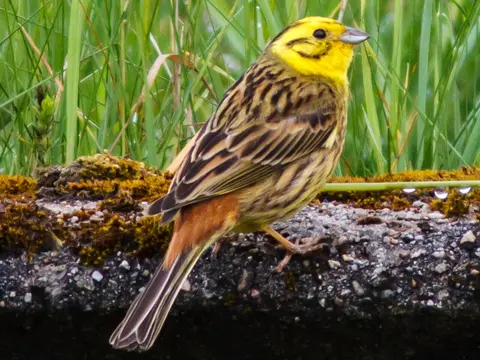
Breeding male with a black face and throat bar, brown back
-
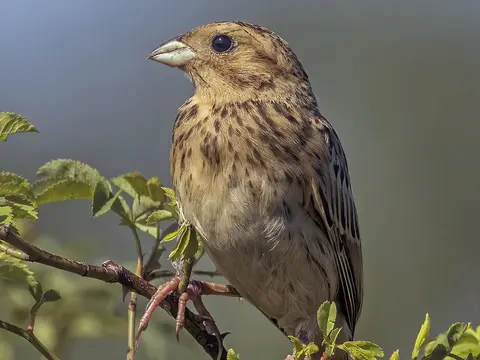
Female with a heavily streaked grey-brown back, pale yellow underparts and a whitish face with dark stripes
-
Short call, "zick"
About the species
The breeding male has a yellow throat and breast beneath a brown back, and his head darkens to almost black in summer. A black throat bar sharpens the contrast, while his wings and tail are mottled. The female is more muted, with a streaked grey-brown back, softer yellow underparts and a whitish face striped around the crown, eye and cheek.
A short "zick" is its call, while the male sings a clear, repeated "tru-tru, tri-tri." It nests on the ground in open vegetation, and adults bring insects to the young.
It breeds in open scrub, wet meadows and marsh edges across northern Eurasia, then migrates south for winter, reaching Southeast Asia and parts of India and China. Seeds are its usual food outside the nesting period; in winter it also feeds in rice fields, grasslands and cultivated areas.
Did you know?
-
Top prize for China's bird trappers
On the southern coast of China, massive illegal trapping of migratory birds targets the Yellow-breasted Bunting as its main species.
Link copied.
Where to find
-
Outside town, in breeding areas, scan open dry rice fields with scattered shrubs for Yellow-breasted Buntings feeding on the ground.
-
In winter in the Irrawaddy Delta, look to waterside reedbeds — large communal roosts have been recorded there.
-
Across wintering areas in Southeast Asia, India, and North Korea, look for large flocks in cultivated land and grasslands.