Birds of Zakaznik «Zhuravlinaya rodina» (Dubnenskiy bolotnyy massiv)
Link copied.
Rarely recorded


- Species
- ≈ 112 species Source, Species: Community observations: eBird and GBIF
- Best time
- April–May Source, Best time: Months with the most species, across all years of observations
- ≈ 112 species Source, Species: Community observations: eBird and GBIF
- April–May Source, Best time: Months with the most species, across all years of observations
- 1979 Source, Founded: From the Russian protected-areas register
Birds in October
All birds
October








About the park
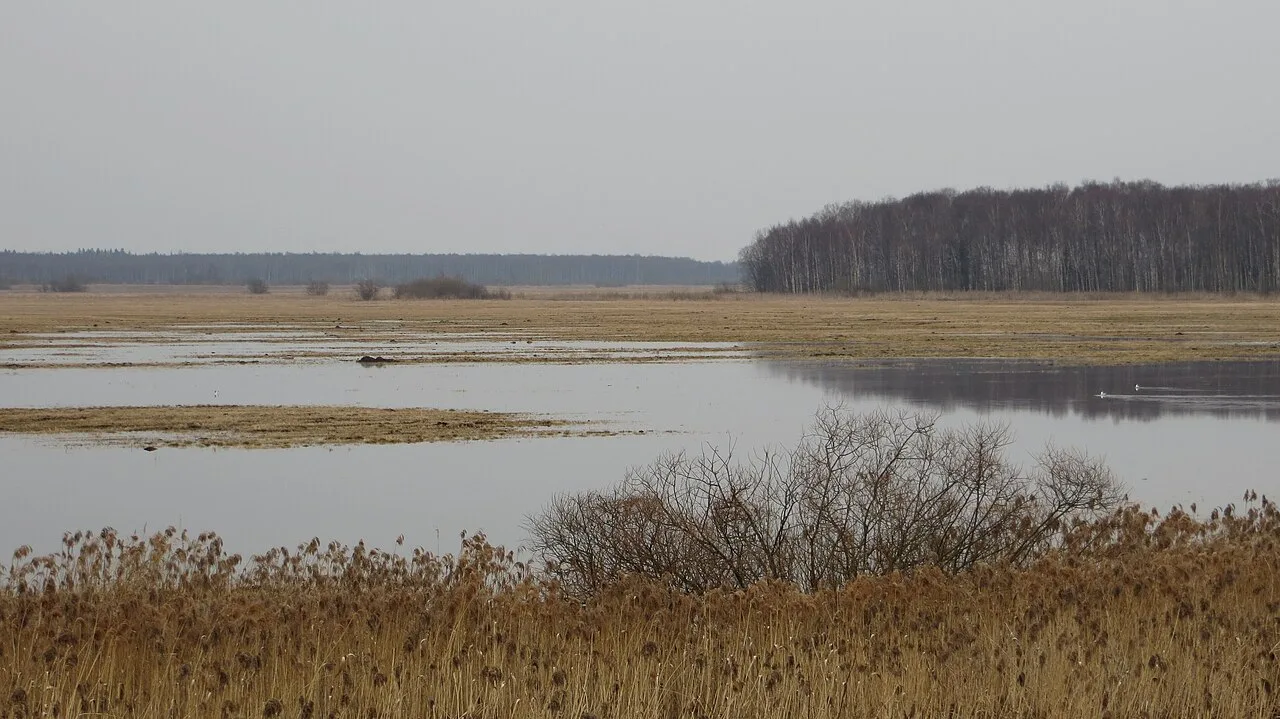
Wet forests and open mires in the Dubna Lowland form a connected breeding landscape for birds. The Dubna massif covers about 6,200 hectares. Its wetlands help sustain the flow of the Dubna and recharge groundwater, which also supports the surrounding forest. Visits to the reserve’s fields, forests and mires are prohibited from 15 April to 1 October. Designated nature trails that are open to visitors remain available for walks. This section chiefly protects forest-and-mire habitats, while farmland and pre-migration gatherings are prominent in Apsaryovskoye, the other part of Crane Homeland.
Read more
The name Crane Homeland is associated with Mikhail Prishvin, who wrote about this area in the 1920s. In 1978, Moscow State University’s Nature Conservation Corps carried out its first crane counts here while drainage for agriculture was already threatening the wetlands. The sanctuary was established on 7 September 1979, joining the Dubna massif and Apsaryovskoye. The protection of water and nesting habitats lies at the heart of its history.
Common Cranes raise their young among the wet forests and open marshes here. During courtship, pairs dance and exchange trumpeting calls. Their nests are hidden in wetland vegetation. The Dubna wetland sector protects these breeding habitats; the autumn gatherings in the fields are associated with another part of the reserve.
When there are more birds
October — 33 species
- Winter
- Spring
- Summer
- Autumn
Getting there
Directions on the map you prefer